Drive Guide · UT-12 & Grand Staircase-Escalante

Utah's Most Spectacular Road
UT-12 & Escalante

One of the most dramatic drives on the continent runs right through your trip. Here's how to do it right — whether you're arriving from Bryce Canyon or heading out toward Capitol Reef and beyond.


Most people drive straight between Bryce Canyon and Zion and call it a trip. But UT-12 goes the other direction from Bryce — east, into some of the most geologically absurd terrain in North America. If you route your trip through it, either arriving or departing, it changes what the whole trip is.

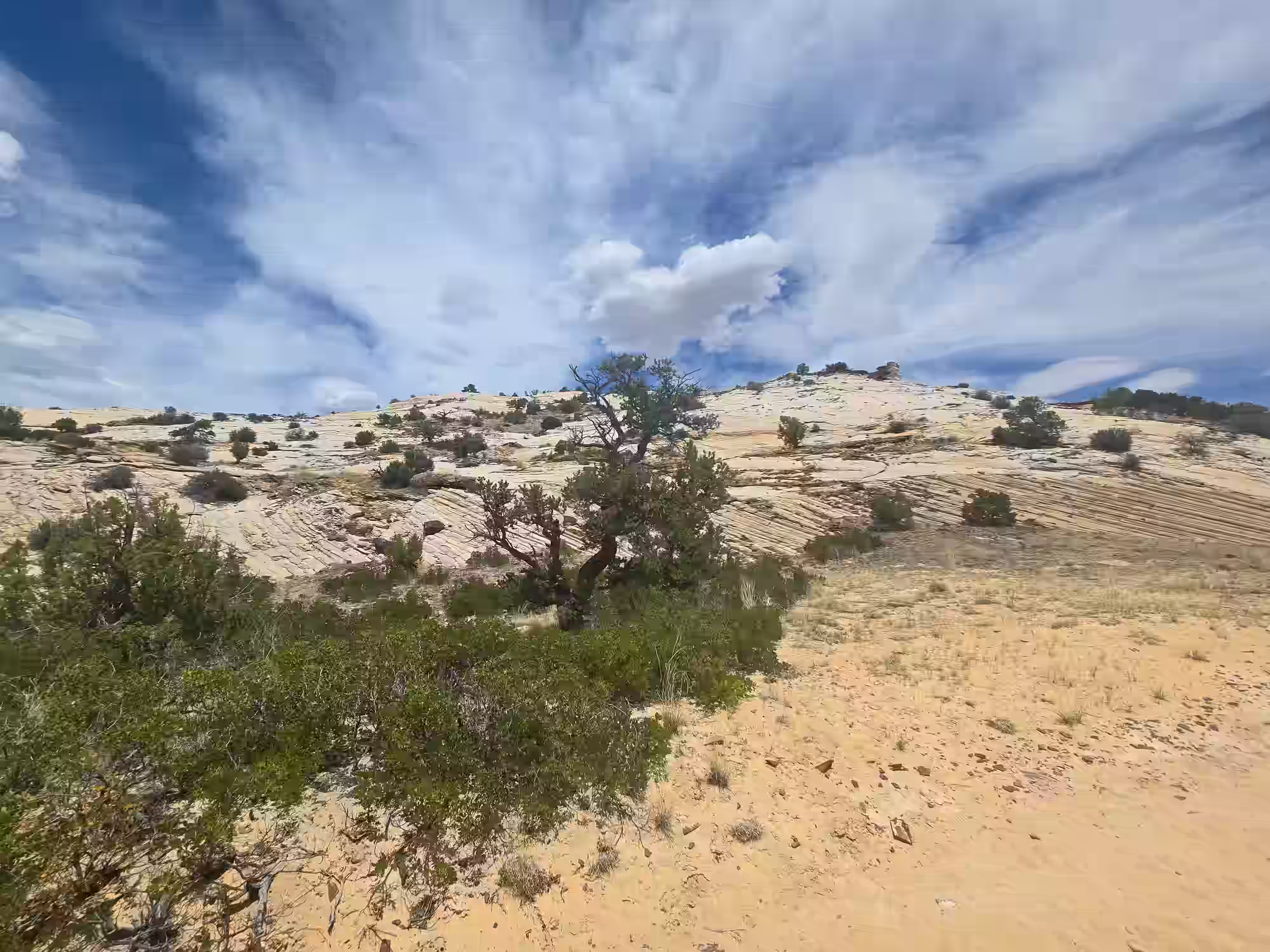
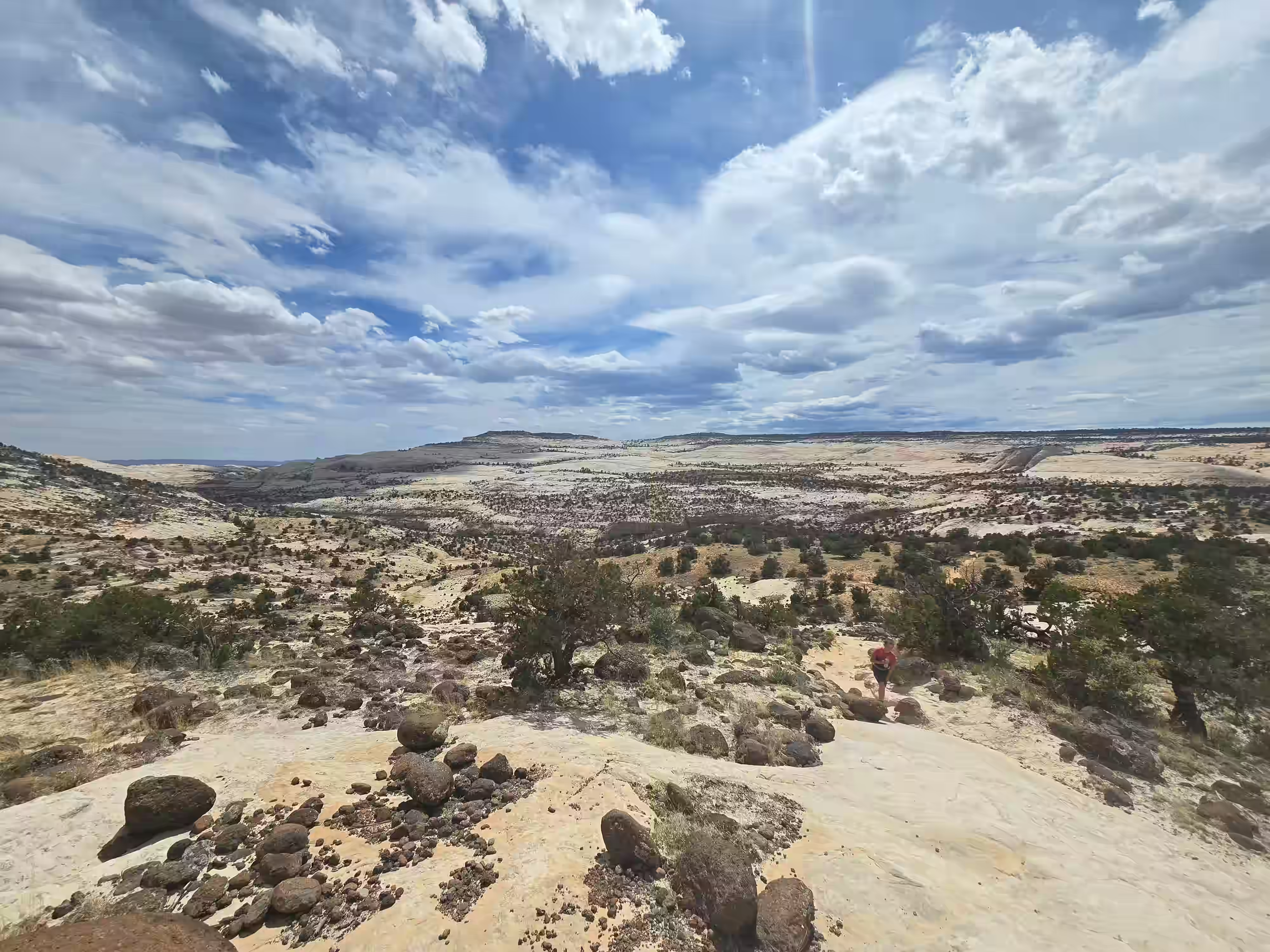
Grand Staircase-Escalante National Monument surrounds most of it. The monument covers nearly 1.9 million acres of canyon, mesa, and badlands — one of the largest and most remote protected areas in the lower 48. No other road gives you access to it like UT-12 does.

From Starlit Ridge, you're at the western gateway of UT-12 — 40 minutes from Red Canyon, an hour from Calf Creek Falls. The road doesn't work as a loop. It's a one-way route: either you drive it arriving from the Bryce Canyon direction, making stops as you come in, or you drive it leaving — heading east toward Capitol Reef and beyond. Either way, you stop where it moves you and keep going.

The honest logistics: UT-12 runs east from US-89 near Panguitch all the way to Torrey, near Capitol Reef. The whole drive end-to-end is about 124 miles and takes 3–4 hours without stops — which means at least 6–8 hours with any meaningful hiking. The stretch that matters most from Starlit Ridge is the 50 miles between Red Canyon and Escalante. That's what this guide focuses on.

At a Glance — Starlit Ridge to Escalante

Drive from Starlit Ridge to Red Canyon~25 min · 25 miles
Drive from Starlit Ridge to Escalante town~1 hr 10 min · 66 miles
Total UT-12 end-to-end (US-89 to Torrey)~124 miles · 3–4 hrs driving
Arriving via UT-12 — key stopsRed Canyon → Calf Creek → Hogback
Departing via UT-12 — key stopsEscalante → Calf Creek → Devils Garden
Recommended stops either direction3–5 max — the road rewards pace
Road surfacePaved throughout · No 4WD required
FuelFill up before leaving Alton / Panguitch

The Road Itself — What Makes It Different

UT-12 is consistently ranked among the top scenic drives in the United States. National Geographic has named it one of the world's most spectacular roads. That's not marketing language — it's earned. The road passes through five distinct geological zones in about 50 miles, drops off canyon rims with essentially no guardrail, crosses a ridge so narrow you can see thousand-foot drop-offs on both sides simultaneously, and threads through a canyon so tight the rock walls close to within arm's reach of the car windows.
UT-12 Scenic Byway southern Utah

UT-12 — ranked among the most spectacular roads in the United States

What makes it relevant to a Starlit Ridge trip specifically: you're already positioned at the western gateway. US-89 north from Alton connects directly to UT-12 near Panguitch. You don't need to detour — it sits naturally on the eastern edge of the Bryce-to-Zion corridor, and it sits naturally on your route whether you're arriving from the Panguitch direction or heading east when you leave.

Mile by Mile — The Key Stops

These are ordered driving east from US-89. Distances are approximate from the UT-12 / US-89 junction near Panguitch.

Mile
0–3
Red Canyon — Dixie National Forest
Scenic Easy Hike Photography
The road starts paying off before you even reach the GSENM boundary. Red Canyon hits you with brilliant vermillion hoodoos right off the highway — same geological family as Bryce, almost zero people, and zero entry fee. Two narrow tunnels painted with Native American petroglyphs add a surreal touch. Pull over at the first viewpoint. The Losee Canyon Trail and Arches Trail connect here for an easy 4-mile loop through formations that would be the headliner if they were anywhere else in Utah.
Mile
~14
Bryce Canyon National Park Junction
If Not Already
UT-12 intersects the Bryce Canyon entrance road here. If you haven't done Bryce, or want to time a sunrise on the rim before continuing east, this is the turn. Inspiration Point at 6 AM on a weekday in shoulder season is a genuinely different experience from midday in summer. Don't skip the park to do UT-12 on a short trip — do Bryce first, then continue east. The 3 Perfect Days guide shows how to structure that.
Mile
~17
Mossy Cave Trail — Bryce Canyon
Easy Hike No Permit
This small trail sits just off UT-12 and requires no shuttle, no timed entry — just a parking lot and a 1-mile round-trip walk. A seasonal waterfall flows past a mossy, shaded alcove dripping with maidenhair fern, and in spring and early summer it's running strong from snowmelt. Worth 45 minutes if you're passing through. No crowds compared to the main Bryce trailheads.
Mile
~18–25
Tropic, Cannonville & Henrieville
Food & Supplies Small Towns
Most drivers blow through these three small towns without stopping. Worth knowing about. Tropic has the Bryce Canyon Coffee Co. (good espresso, bakery, real seating) and the Heritage Museum — pioneer artifacts, geological specimens, and a surprisingly well-curated local history collection. Cannonville has a Visitor Center with GSENM maps, current road conditions for Cottonwood Canyon Road, and staff who'll tell you honestly whether the dirt roads are passable that day. Henrieville is mostly a blink-and-miss, but the drive through all three gives you a sense of how people actually live out here — which is worth something.
Mile
~30
Kodachrome Basin State Park
Scenic Hike 9-Mile Detour
A 9-mile detour south off UT-12 down Cottonwood Canyon Road. Worth it if you have time. Kodachrome's towering sandstone spires — called "sand pipes" — don't look like anything else in southern Utah. The name comes from a National Geographic photo expedition in 1948; the team named it after the film they used. The Panorama Trail (6 miles, easy) is the best route through the park. Check road conditions — Cottonwood Canyon Road is dirt and occasionally impassable after rain.
Mile
~38
Head of the Rocks Overlook
Photography 5 Minutes
Pull off. Seriously. This overlook at the top of the Escalante Canyons gives you one of the most sweeping panoramas on the entire drive — mesa layers dropping into canyon country in every direction, with the Henry Mountains floating in the distance. Zero effort, maximum payoff. Ten minutes out and back from the car.
Mile
~39
Native American Cliff Granaries
History Roadside Stop
About 10 miles past the Powell/Blues Overlook, watch for a cliff face carved into a natural alcove on the canyon wall — visible from the road. A viewing tube at the pullout lets you zoom in on Native American granaries carved into the rock centuries ago. Zero effort, two minutes, and the kind of detail that makes you realize how thoroughly this landscape was known before any highway existed. Almost no other guide covers this specific stop. Watch for the signed pullout on your right heading east.
Mile
~40
Boynton Overlook
Photography 2 Minutes
A second overlook between Head of the Rocks and the Hogback that most guides skip entirely. The view here is distinctly different — you're looking down into the Escalante River valley rather than across the mesa layers — and on the right morning light it rivals Head of the Rocks for photography. Two minutes from the car. Zero reason not to stop. Coordinates: approximately mile marker 40 on UT-12, look for the signed pullout on the south side.
Mile
~42
The Hogback Ridge
Don't Miss Photography
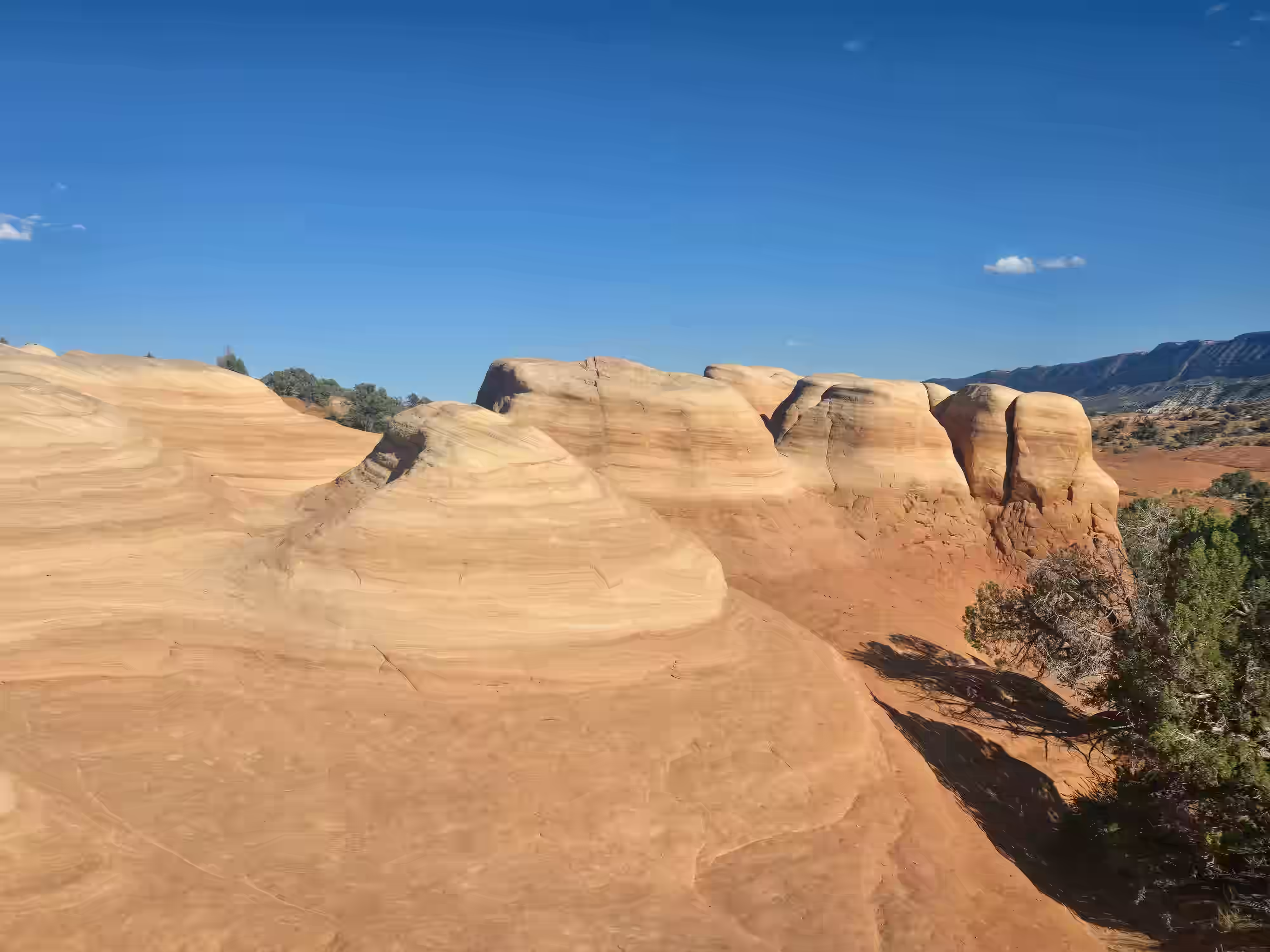
This is the one that people photograph in disbelief. UT-12 rides a narrow ridge of slickrock — maybe 30 feet wide in places — with steep drops of 800–1,000 feet on both sides simultaneously. No guardrail on much of it. Drive it slowly. Don't let your passenger be on their phone. The road climbs and twists through formations that look computer-generated. If you do nothing else on UT-12, drive the Hogback. There are pullouts to stop and actually absorb what you're looking at.
Mile
~44
Upper Calf Creek Falls — The Insider's Pick
2.1 mi · Steep 87-ft Waterfall Photography
Almost nobody talks about this one. The trailhead is between mile markers 80–81 on UT-12 — and there is no sign on the highway. You'll miss it if you don't know it's there. A steep 2.1-mile round-trip drops to an 87-foot waterfall with pools below, and because it's unmarked and shorter than Lower Calf Creek, the crowds are a fraction of what you'll find at the lower trailhead. The trail requires some scrambling. Parking is a small pullout — arrive early and you may have the whole thing to yourself. Same $5/vehicle fee as Lower Calf Creek (America the Beautiful Pass covers it). This is the kind of stop that makes a guide worth reading.
Upper Calf Creek Falls — 87-foot waterfall off UT-12 Utah

87-foot drop, rarely crowded — no highway sign marks the trailhead

Upper Calf Creek Falls trail Escalante Utah
Mile
~46
Calf Creek Falls — Lower Trail
Must Do 6 mi · Moderate Waterfall
The single best hike accessible directly off UT-12. A 6-mile round-trip walk through a canyon carved into cream-colored Navajo sandstone leads to a 126-foot waterfall dropping into a clear green pool. The contrast — desert driving, then a waterfall with swimming hole — is genuinely shocking. The trail follows Calf Creek along the canyon bottom; it's sandy in places but not technical. $5/vehicle day use fee. Arrive before 9 AM in summer or expect a full parking lot.
Mile
~49
Kiva Koffeehouse
Coffee & Food Photography Seasonal
Near milepost 73, look for a small dirt driveway on the south side — easy to miss if you're not watching for it. Kiva Koffeehouse is a circular stone-and-timber café perched on the rim of Escalante River Canyon, built by hand in 1998, and one of the most photographed stops on the entire byway. The views from the outdoor patio are genuinely jaw-dropping. Coffee, pastries, breakfast burritos, sandwiches. Open Wednesday–Sunday, approximately 8:30am–4:30pm. Closed Monday, Tuesday, and November through March — check kivakoffeehouse.com for current hours before planning around it. The Kiva Kottage offers overnight rooms on the rim if you want to stay.
Mile
~52
Escalante Town — Supplies & Info
Fuel & Food
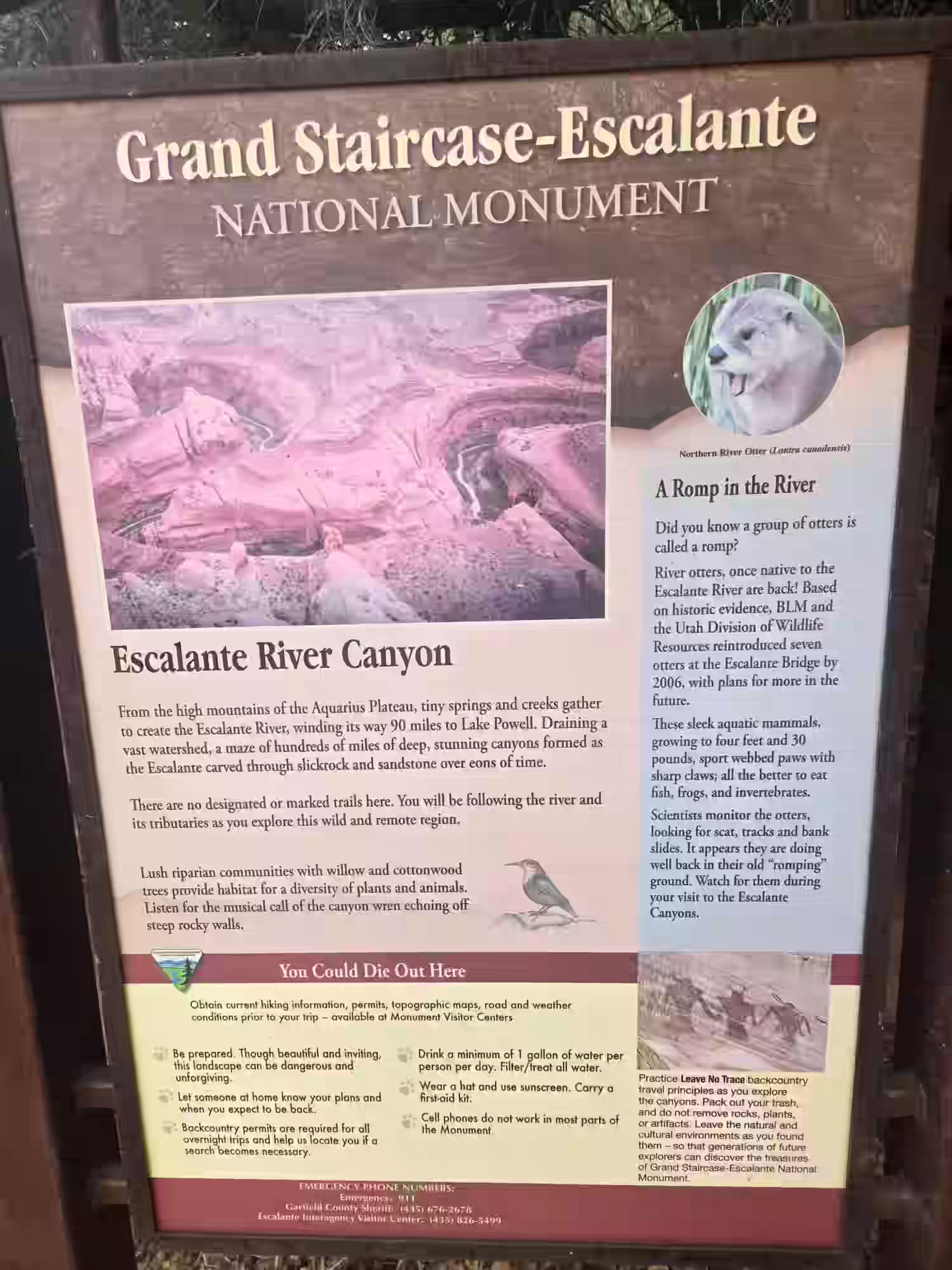
Small town, real services. Fill up on gas here — it's the last reliable fuel before Boulder if you're continuing east, and prices only go up after this. The Escalante Interagency Visitor Center on the west end of town has current road conditions for all the canyon routes, permit info, and genuinely useful staff. Nemo's Burgers is the most reliable quick meal in town. Esca-Latte has coffee and bakery items most mornings.
Escalante River trailhead information sign Utah

The Escalante Interagency Visitor Center has current road conditions for all canyon routes

Detour
2 mi
Escalante Petrified Forest State Park
Petrified Wood Easy Walk 2 Mi Off Hwy
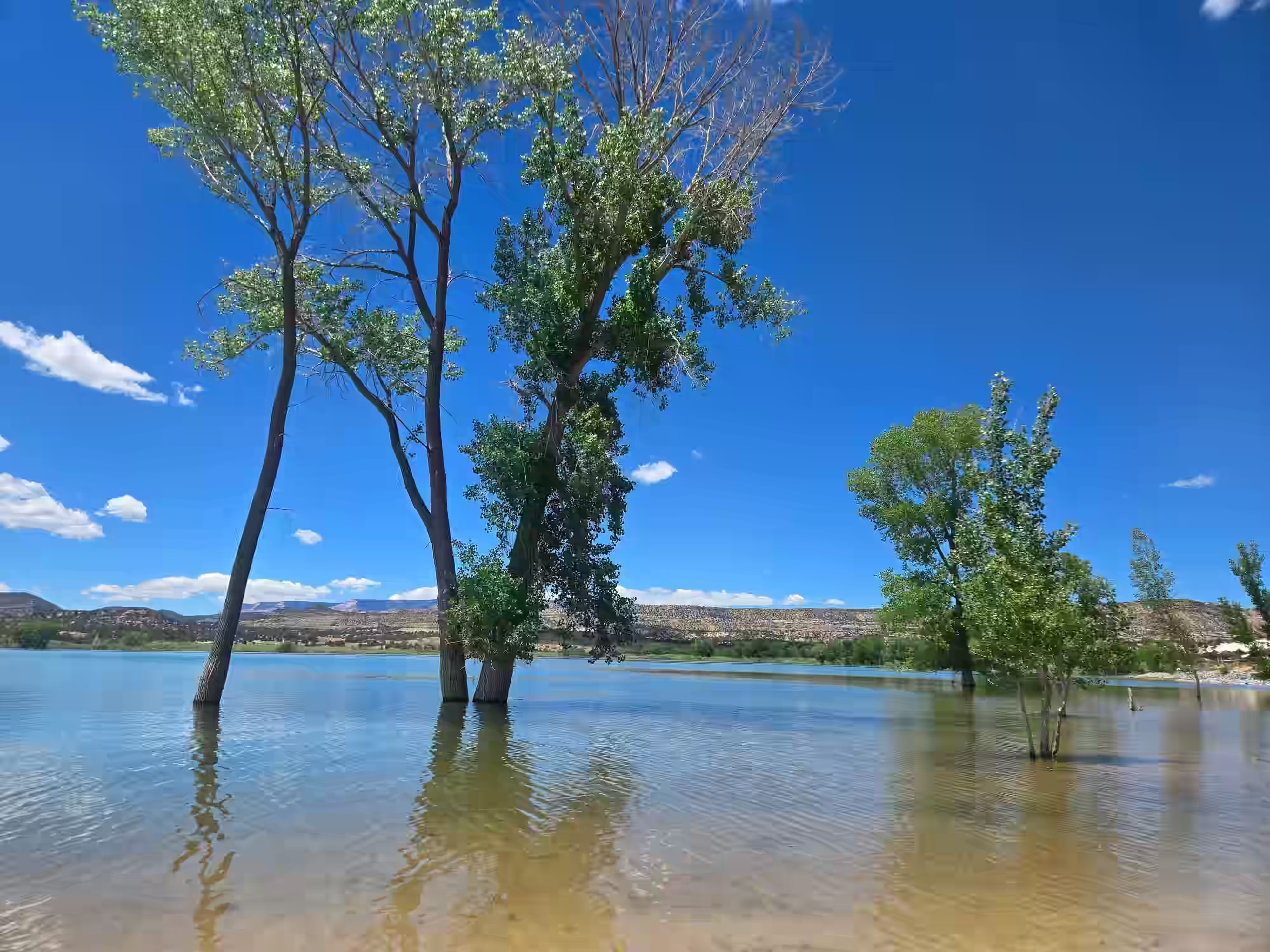
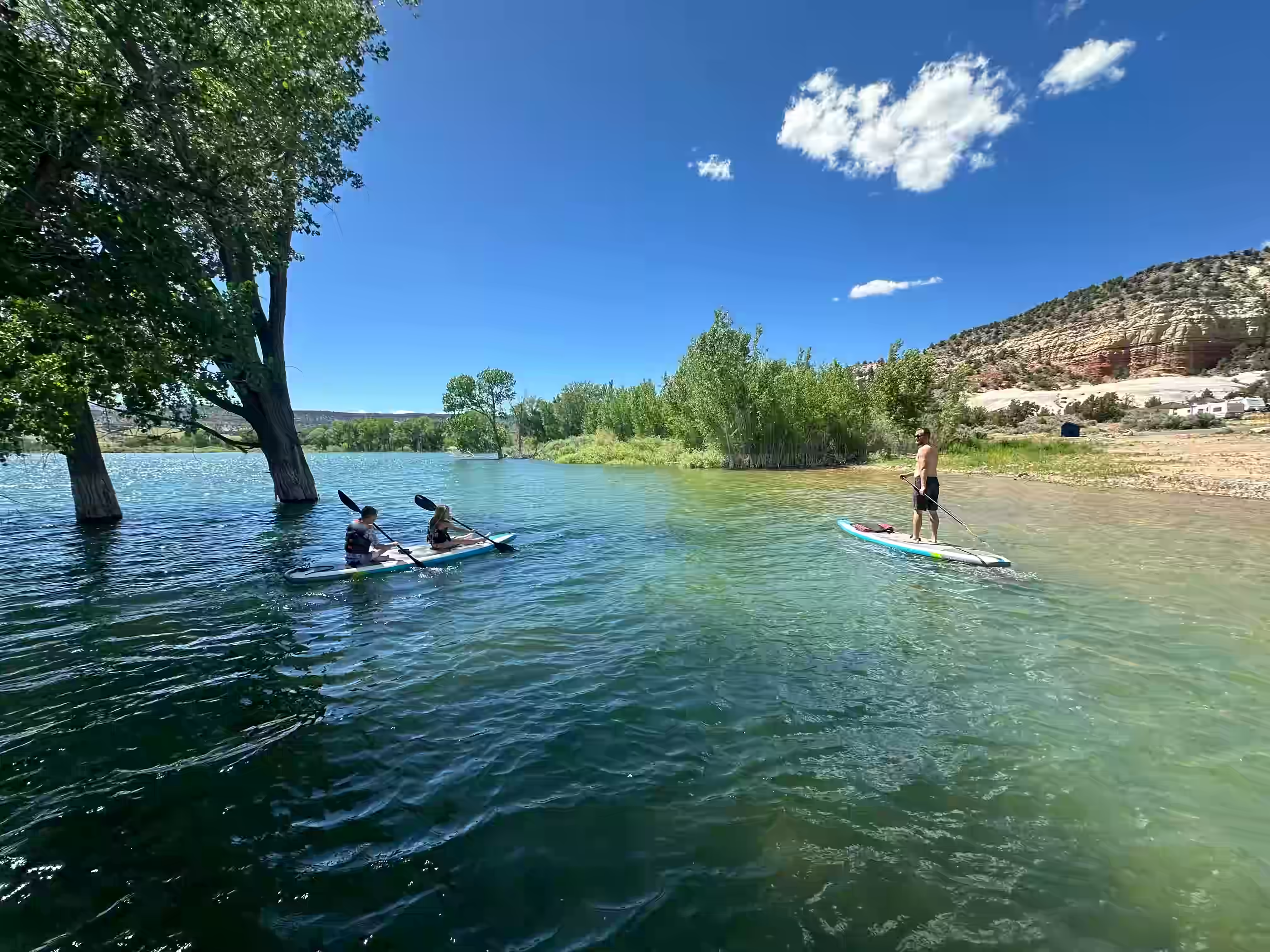
Two miles west of Escalante town off UT-12. Easy to combine with a fuel stop — pull in, fill the tank, then drive out to the park. The main draw is a 50-foot petrified log considered one of the most complete specimens in the Morrison Formation — the same geological layer that produces dinosaur fossils across the Colorado Plateau. A short trail leads through scattered petrified logs in the desert. There's also a reservoir for kayaking and swimming if you need a midday reset. $10/vehicle. Underrated and genuinely interesting, especially for kids.
Escalante Petrified Forest State Park Utah

50-foot petrified log — one of the most complete in the Morrison Formation

Escalante Petrified Forest trail southern Utah
Detour
7 mi
Devils Garden — GSENM
Don't Miss Photography Easy Walk
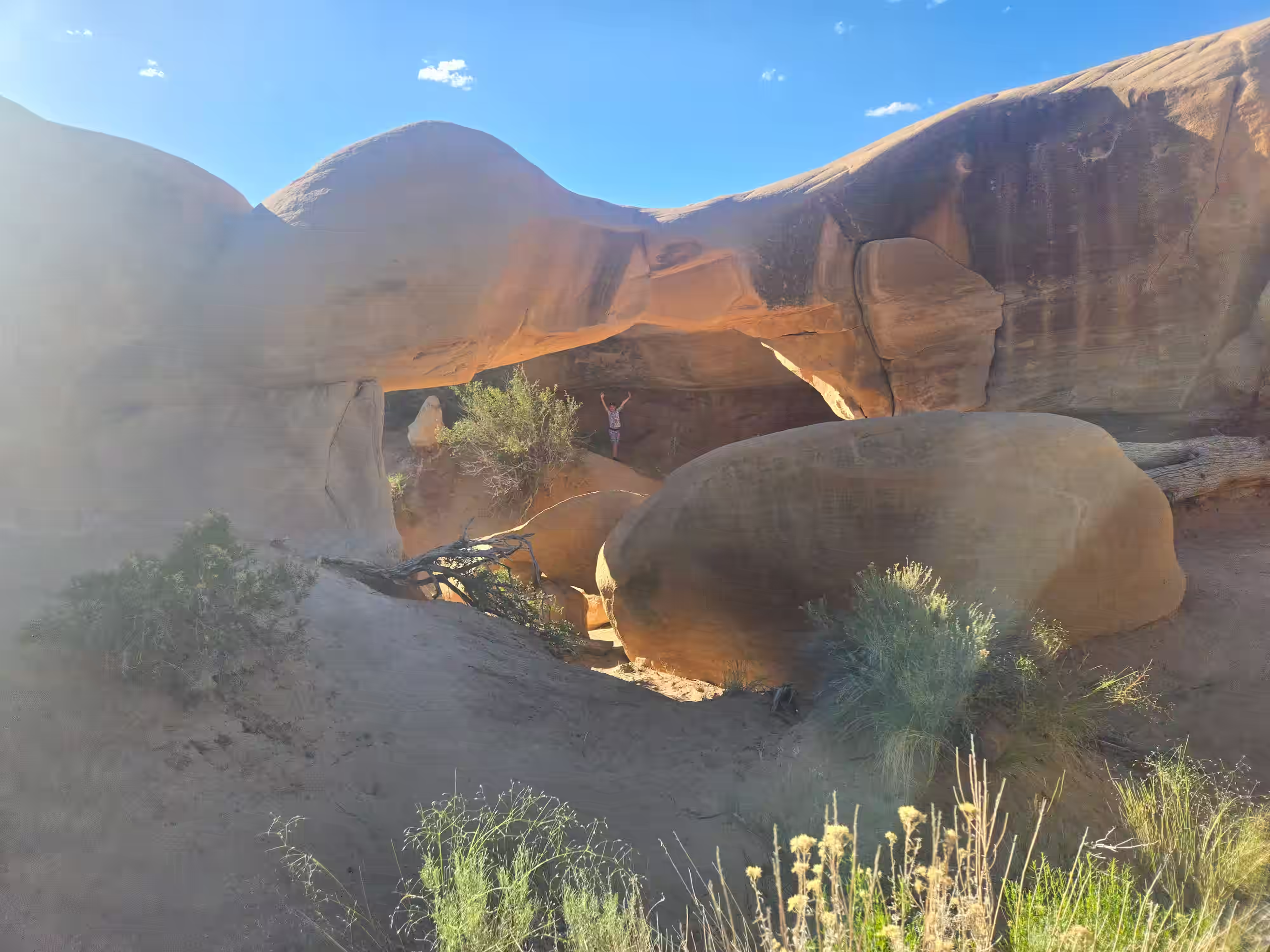
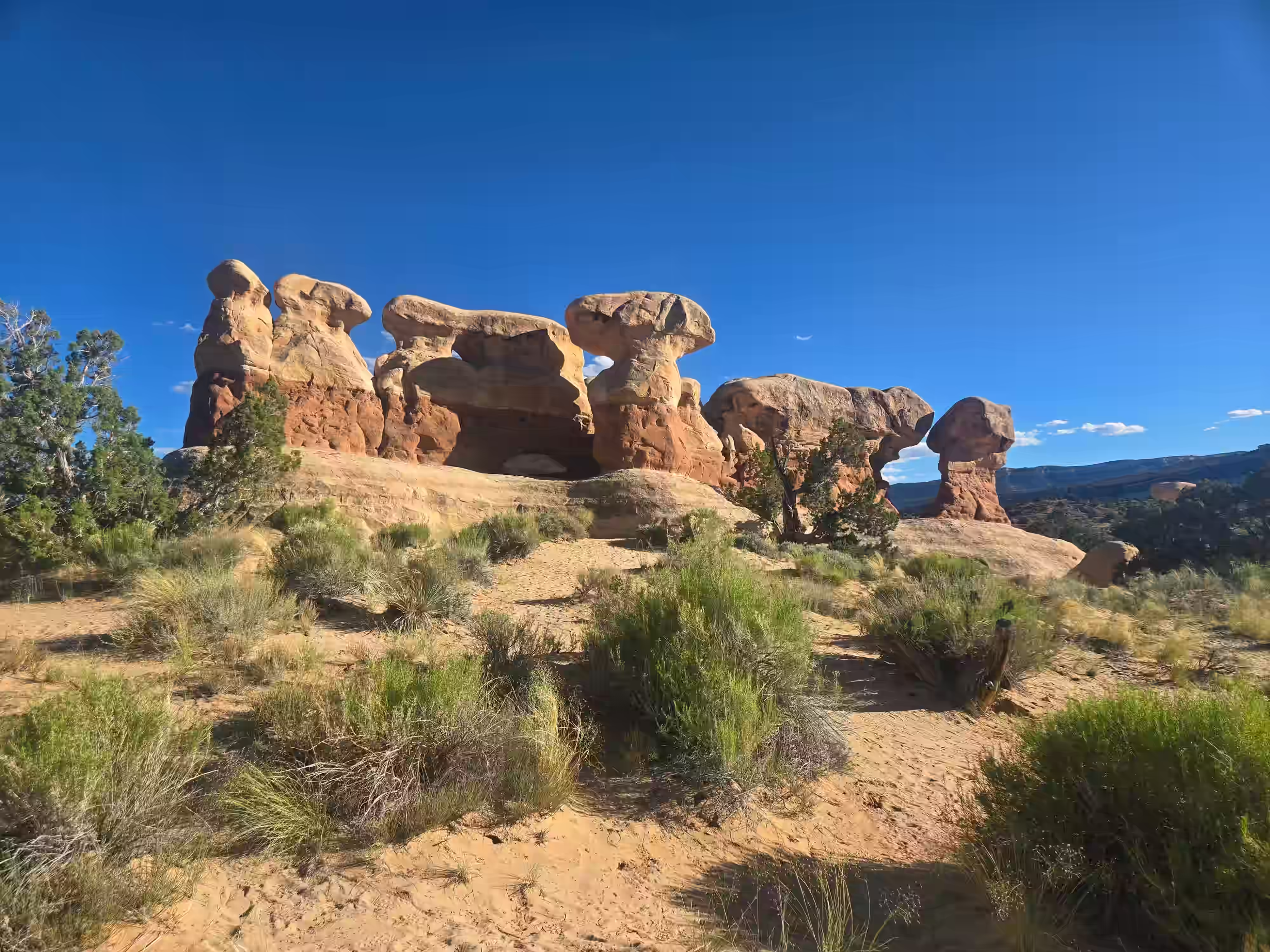
Seven miles north of Escalante on Hole-in-the-Rock Road (dirt, passenger car fine in dry conditions). A cluster of natural arches, hoodoos, and balanced rocks in a small area — you can walk through all of it in 30–45 minutes. It looks like a miniature, uncrowded version of Arches National Park. No permit, no fee (as of 2026 — check BLM for updates), and almost no one there. This is the kind of spot that makes the GSENM legendary: jaw-dropping terrain that most people have never heard of.
Devils Garden Grand Staircase-Escalante Utah

Natural arches and hoodoos — 7 miles north of Escalante on Hole-in-the-Rock Road

Devils Garden hoodoos Escalante Utah
Mile
~66
Boulder Town & Anasazi State Park Museum
Cultural Optional
Boulder is one of the last towns in the continental US to receive mail by mule — it held that distinction until 1940. Anasazi State Park Museum here covers 800-year-old village ruins and artifacts from the Ancestral Puebloans who lived on this plateau. Small but excellent. Hell's Backbone Grill, the most famous restaurant on UT-12, is in Boulder — reservations recommended, prices reflect the reputation. If you're continuing to Capitol Reef, Boulder is a logical lunch stop.
Side
Trip
Hell's Backbone Scenic Byway — Boulder Loop
Scenic Drive For Adventurers 40-Mile Loop
From Boulder, a 40-mile dirt road loops north through the Dixie National Forest and back to Escalante — passing the one-lane Hell's Backbone Bridge, which crosses a narrow ridge with sheer canyon drops on both sides. Passenger car accessible in dry conditions. Not recommended after rain or in shoulder season when the road can be soft. The Hell's Backbone Grill in Boulder (which many guides mention for its restaurant) is named for this road — not the other way around. The drive itself is spectacular and almost nobody does it. Allow 2–3 hours for the loop. Check current conditions at the Escalante Visitor Center before attempting.
Mile
~85–95
Boulder Mountain Overlooks — Homestead & Larb Hollow
Panorama Photography
If you're continuing east past Boulder toward Capitol Reef, UT-12 climbs Boulder Mountain — reaching 9,000–9,400 feet — with two signed overlooks that deliver some of the most expansive views on the entire byway. On a clear day you can see Capitol Reef, the Henry Mountains, and Grand Staircase-Escalante in a single panorama. The Homestead Overlook and Larb Hollow Overlook are both signed and easy pullouts. This stretch of the road is less famous than the Hogback but arguably equally dramatic, just in a completely different register — high forest and sweeping plateau instead of canyon-edge exposure. Worth pushing past Boulder for if you have the time.

Grand Staircase-Escalante — What It Actually Is

The Monument

Grand Staircase-Escalante National Monument was designated in 1996 and covers nearly 1.9 million acres across three distinct regions: the Grand Staircase (a series of geological terraces stepping up from the Colorado River), the Kaiparowits Plateau (a fossil-rich badlands), and the Escalante Canyons (the slot canyon and canyon country most visitors explore).

It's one of the least-visited major monuments in the American West — partly because it's genuinely remote, partly because there are no visitor centers inside the actual monument, and partly because it doesn't have a single iconic landmark the way Zion or Bryce do. What it has instead is scale. You could spend three weeks in the Escalante Canyons alone and not see the same canyon twice.

Passing through on UT-12, you're barely scratching the surface — but scratching the surface of GSENM is still more remarkable than going deep into most places.

Slot Canyons — The Short Ones

The Escalante area has slot canyons that rival Antelope Canyon in beauty but require a 30-minute drive on a dirt road instead of a $50 guided tour with 200 other people. Spooky Gulch, Peek-a-Boo Gulch, and Brimstone Gulch are all accessible off Hole-in-the-Rock Road south of Escalante. Spooky is genuinely tight — narrower than shoulder-width in places — and the light inside on a sunny afternoon is extraordinary.
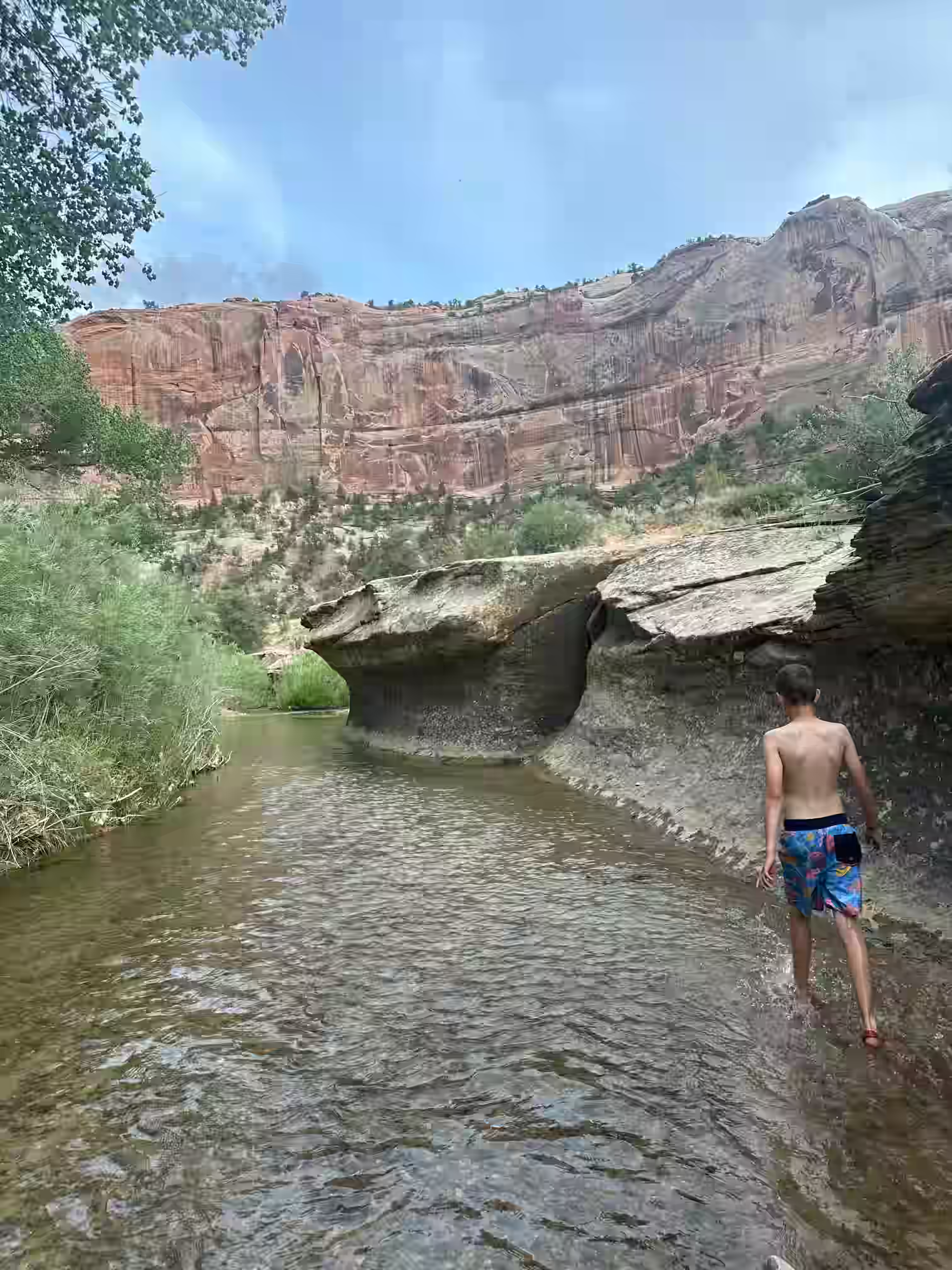
Hiking Escalante canyons Grand Staircase-Escalante Utah

The Escalante Canyons — slot canyon beauty without the guided tour crowds

Before you drive out: Stop at the Escalante Interagency Visitor Center and ask about current conditions on Hole-in-the-Rock Road. Rain turns sections of it into impassable clay instantly. The staff are accurate and will tell you straight if you shouldn't attempt it that day.

Willis Creek Slot Canyon — The Easiest Win

Willis Creek is 25 miles south of Alton on Skutumpah Road — technically reachable without even going to Escalante. It's also listed in the Starlit Ridge hiking guide. It's a 4-mile round trip wading through a narrow canyon carved into Navajo sandstone, with walls that close overhead and light filtering down in shifting patterns. One of the most accessible slot canyon experiences near the property. Dry most of the year. Check road conditions (dirt road, impassable when wet).
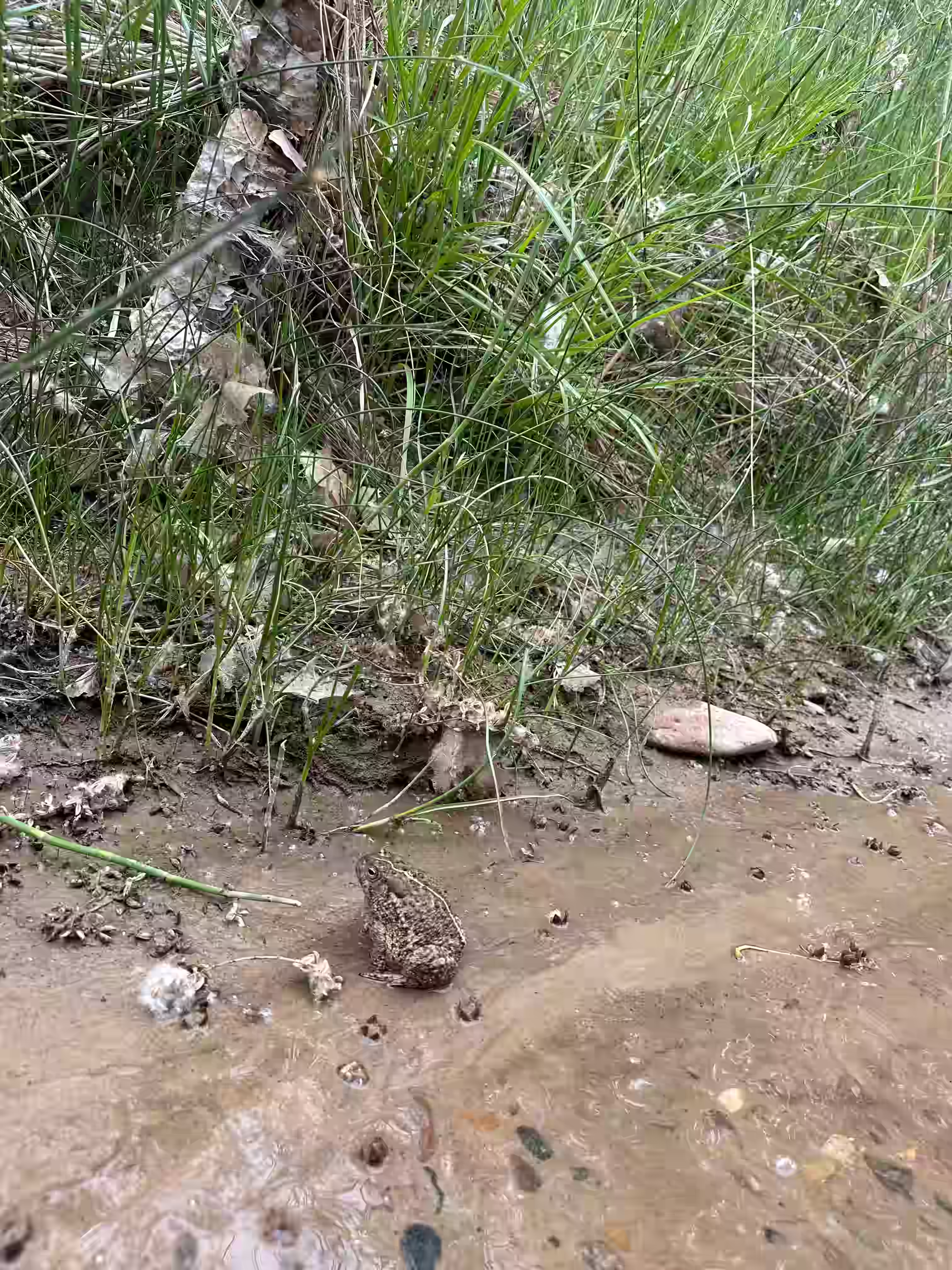
Escalante River canyon southern Utah

Willis Creek and the Escalante River canyons — accessible without going all the way to Escalante town

When to Go — Timing the Drive

UT-12 is accessible year-round, but the experience changes significantly by season. For a broader picture of what the whole Bryce-Zion corridor looks like month by month, see the Bryce & Zion Seasons Guide.

Spring (April–May) is arguably the best time. Calf Creek is running full from snowmelt, the wildflowers are up on the mesas, and there are almost no crowds. Mornings are cold at elevation — dress in layers. Slot canyon floors can have standing water from snowmelt in early April.

Summer (June–August) brings the most visitors and the most intense light for photography. Heat in the canyon bottoms is real — Calf Creek's trail gets exposed and hot. Start before 8 AM. Afternoon thunderstorms are common from mid-July onward and can raise flash flood risk in slot canyons instantly. Check the forecast before entering any slot canyon.

Fall (September–October) is the locals' choice. Same uncrowded feel as spring, colors in the canyon maples and cottonwoods, and perfect hiking temperatures. This is the best season for the Escalante Canyons if you can only go once.

Winter — UT-12 stays open but dirt roads into GSENM can be treacherous. The monument interior is best left to experienced backcountry travelers in winter. UT-12 itself is plowed and passable in most conditions, and the canyon light in winter is exceptional if you're just doing the drive.

Flash flood warning — slot canyons: Check forecasts for the entire watershed upstream, not just your location. A storm 20 miles away can push a wall of water through a slot canyon with no warning. If the forecast shows any chance of thunderstorms, choose a different hike. This is not a theoretical risk in southern Utah.

How It Fits Your Trip

Arriving via UT-12 — you're coming from the Bryce Canyon direction on US-89, turning east onto UT-12 near Panguitch. This is the natural way in if you've spent time in Bryce Canyon City or at the park. Drive east: Red Canyon first, then Mossy Cave, then the towns of Tropic and Cannonville, then the Hogback, then Calf Creek. Stop where it moves you. Roll into Alton from the east on US-89 having already done the best of the road on the way in.

Departing via UT-12 — you leave Starlit Ridge heading north on US-89, turn east at Panguitch onto UT-12, and keep going. Red Canyon, Bryce junction, Kodachrome Basin if you want the detour, then the Hogback, Calf Creek, Escalante, Devils Garden, Boulder. If you're heading to Capitol Reef or Salt Lake, this is a legitimate departure route that adds two hours of some of the best driving in the country. You don't backtrack — you just keep going.

The 50-mile stretch between Red Canyon and Escalante is the one that earns the road its reputation. Either direction, give it time. Three stops done well beats seven stops rushed.

Book Your Basecamp

UT-12, the parks, the slot canyons — Starlit Ridge puts you 25 miles from Red Canyon and 40 miles from Bryce. Book direct for the best rate.

From Starlit Ridge

Red Canyon25 mi · 25 min
Bryce Canyon Junction36 mi · 35 min
Cannonville Visitor Center44 mi · 45 min
Upper Calf Creek TH54 mi · 55 min
Calf Creek Falls TH57 mi · 1 hr
Kiva Koffeehouse60 mi · 1 hr 5 min
Escalante Town66 mi · 1 hr 10 min
Devils Garden73 mi · 1 hr 25 min
Boulder Town85 mi · 1 hr 30 min

Essential Gear

Full tank of gas — fill in Alton or Panguitch
Water — 2L minimum per person for Calf Creek
Offline maps — cell signal goes out east of Escalante
🌌 Dark Sky Guide — for the drive back at night
Sun protection — the canyon trails are exposed
$5 cash or card — Calf Creek day use fee
Sandals or water shoes — slot canyons have standing water